
Conclave
The politics of the holy, the despicable and the innocent. But who is who?
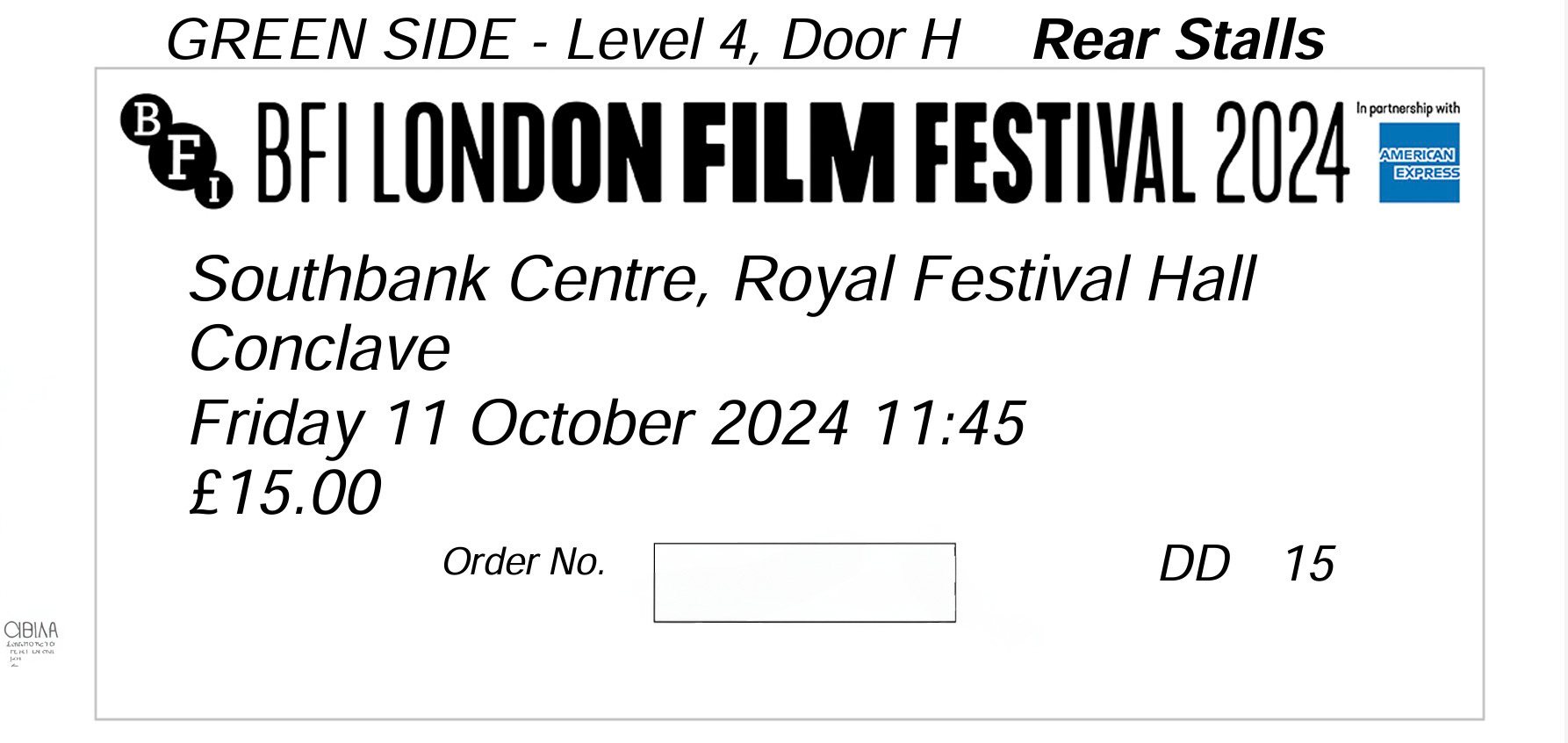
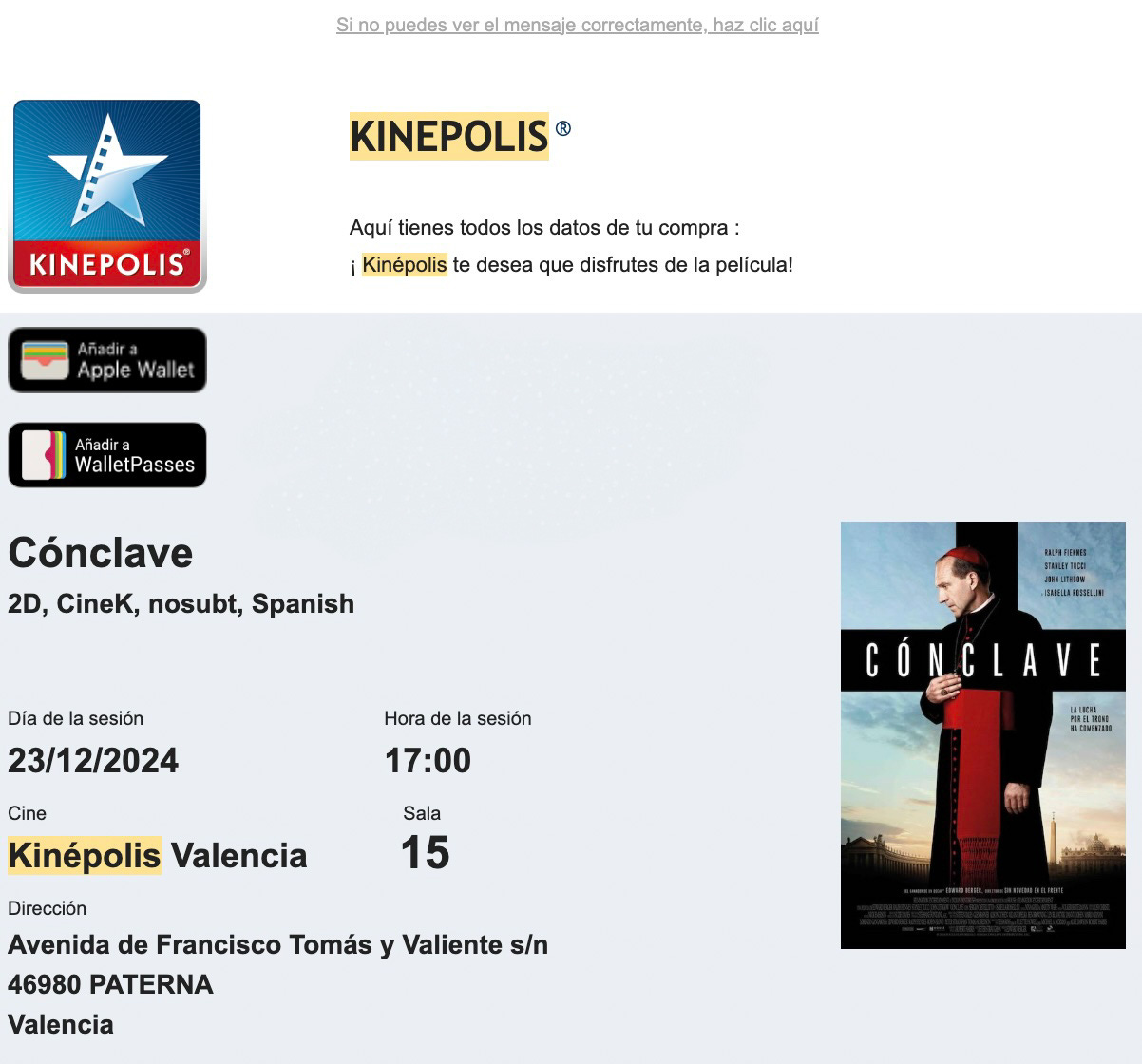
Venue: Royal Festival Hall & Kinepolis, Valencia
Date watched: 9-Oct-2024 & 23-Dec-2024
My rating: 8.5 out of 10
5 of 168 films to watch.
Strengths
Masterful acting.
Beautiful sets.
Great costumes.
Weaknesses
Some parts of the plot are truly implausible.
Female characters seemed decorative, they have a central role in the plot but they have very little screen time.
Summary
When the Pope dies the cardinals of the Catholic Church turn from shepherds of souls into shrewd politicians, this forced change of role brings all what is wrong in politics in full view: people hide their past for different reasons, some others ponder carefully what is the best path to steer the church in the direction they think to be the best regardless if their methods are ethical, what is sorely missing is a strong enough voice calling for compromise and consensus until an outsider starts to make inroads into the cardinals’ consciences.
Musings with plot spoilers
As you can see I watched the film twice, once during the festival proper, and once more when joining somebody else that had not seen the film (the second time translated into Spanish, which was absolutely horrible, especially with characters from all around the world whose accents are very specific to who they are, all reduced to Spanish accents, I find this a minor form of vandalism, but I digress already).
So, we are thrown right in the middles of the action when Dean Lawrence (or “Diacono” as he is often called, it is Rome after all, played assuredly and convincingly by Ralph Fiennes) rushes to the room in the Vatican City where the Pope is very ill, he arrives just after the Pope has died, so the name of the film hides no surprises, we are about to witness a dramatisation of a Conclave, the procedure followed to elect a new Pope.
Lawrence and his close friend , Bellini (Stanley Tucci in one of his best roles) are truly saddened by the Pope’s death but are under no illusions about the political fracass that lies ahead of them.
Lawrence, given his position in the church hierarchy, realises that he will be in charge of organising the whole thing, something he doesn’t relishes but for which the departed Pope believed he was particularly well suited, a backhanded compliment of sorts since this confidence talks of bureaucratic rather than ecumenical brilliance.
So Lawrence proceeds to direct the whole affair, the room of the Pope is sealed although not locked, the cardinals start to arrive in a procession of colorful characters from all around the world and the political discussions start almost immediately.
Lawrence is consumed by these discussions and all the logistics of preparing the Sistine Chapel for the Conclave when he’s informed that one of the likely front runners, the scheming Tremblay, was fired from his prominent position within the hierarchy by the Pope the very day he died. He has no time to delve into this since the cardinals are about to be sequestered inside the building, nevertheless he asks an aide to dig about this matter to see what he finds. He’s troubled by all this when a most unexpected problem arises, a mexican cardinal nobody knew about, Vincent Benitez, shows up ready for the jamboree. Lawrence checks his history of sacrifice (and his papal papers) and accepts him as one of their own.
From this point on we witness the political machinations and misfortunes of the cardinals shown as having at least a chance in hell to become Pope, and in a race with only one winner most candidates experience only misfortune.
Looking at the previous paragraphs I see I started with Lawrence most of them, this is careless but fitting, hes is our tortured Sherlock in robes the likes of whom we have not seen since Sean Connery in “The name of the Rose”: Lawrence derails the chances of two candidates by following his natural curiosity, the initial frontrunner in the ballot, Nigerian cardinal Adeyemi, is out out of contention when Lawrence uncovers a past that would make Adeyemi’s papacy untenable if discovered after his election, Lawrence also clips the wings of Tremblay after doing detective work which ultimately exposes him as a corrupt schemer.
But the resolution of the Conclave is shaped by external events, terrorist attacks unleash the most reactionary candidate, Cardinal Tedesco, in a bid for power based on fear, anger, xenophobia and conservatism of the worse kind, but this is counterbalanced by Cardinal Benitez that has been hiding in the shadows in quite a literal way, in great degree thanks to his apparent lack of interest in becoming Pope himself and presenting a more humane and positive role of the church in today’s complex and dangerous world.
The ending may not please most catholics but it was cinematically surprising, although the arch of the character achieving the papacy stretches credibility from the very start he appears in the scene.
Women? Only two characters of note with brief appearances, Isabella Rossellini does as best as she can with the small role she gets as the highest ranking nun on site, she provides vital clues to Lawrence to derail two of the papal candidacies, but the film is about patriarchy central and it stays firmly so.
I liked the film in spite of its shortcomings, one would imagine that it could be plodding given the seriousness of the topic but in reality the script makes it quite pacey taking us from situation to situation quickly but not breathlessly.
Amazon UK sponsorship links:
Haven’t you seen the film? Get it here (or the book from which the script is adapted).
This film belongs to Ralph Fiennes, in any other year he would be the undisputable favorite for all the acting awards (he already got a BAFTA), you can enjoy his histrionic genius by browsing his available films.